AMD Shifts Focus to Physical AI Architecture for Real-World Robotics
TechTalkThai
Key summary
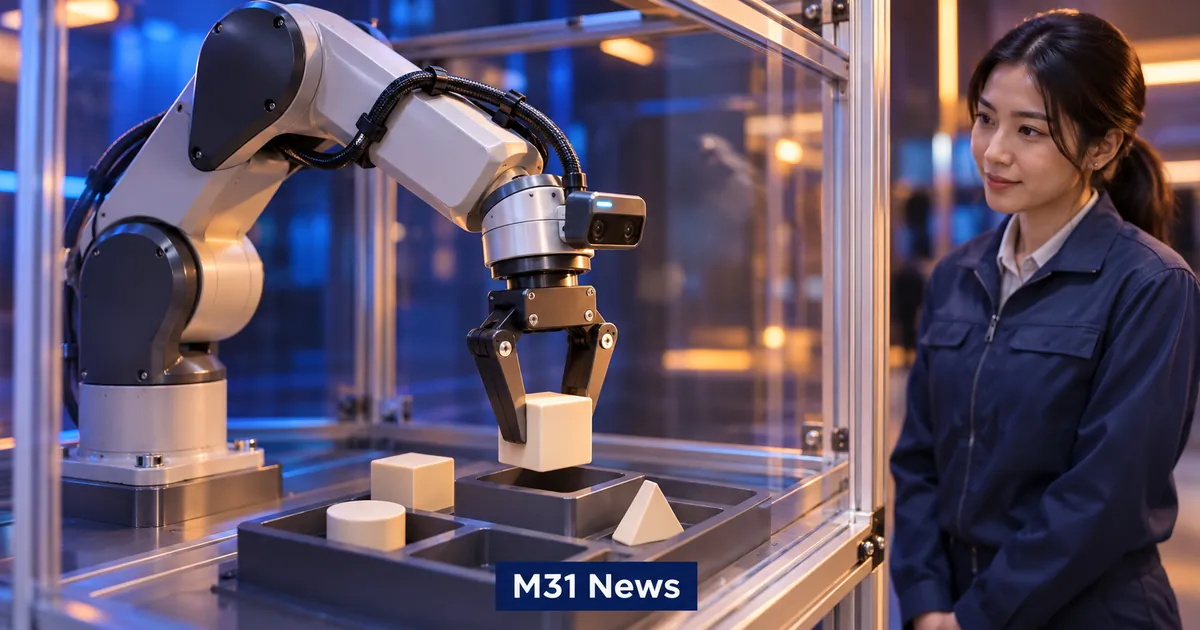
Salil Raheja, CEO and General Manager of AMD's Adaptive and Embedded Computing Group, explained the transition from Cloud AI to Physical AI, emphasizing that system-level performance is crucial for robots that need to understand and control machinery in the real world. Traditional metrics like TOPS are no longer sufficient; instead, end-to-end latency and tail latency should be used. Raheja noted that AMD has over 20 years of experience in the robotics industry. He stated that perception tasks are well-suited for GPUs/NPUs, while real-time control requires FPGAs and Adaptive SoCs for accuracy and determinism. CPUs serve as the coordinating element, and the system must be designed for safety from the outset, using redundancy and graceful degradation according to standards such as IEC61508, ISO26262, and ISO13849.
M31 has compiled the key facts based on reporting from the source below. Please refer to the original article for details.
This article was restructured with AI-assisted translation and may contain errors. Please refer to the original source below for accuracy.
Source report
TechTalkThai
Read original ↗https://www.techtalkthai.com/amd-from-ai-that-answer-to-ai-that-commit-pr/