Thailand Insight · economy
Thailand's B20 and E20 Fuel Tax Cuts: What Drivers Actually Pay
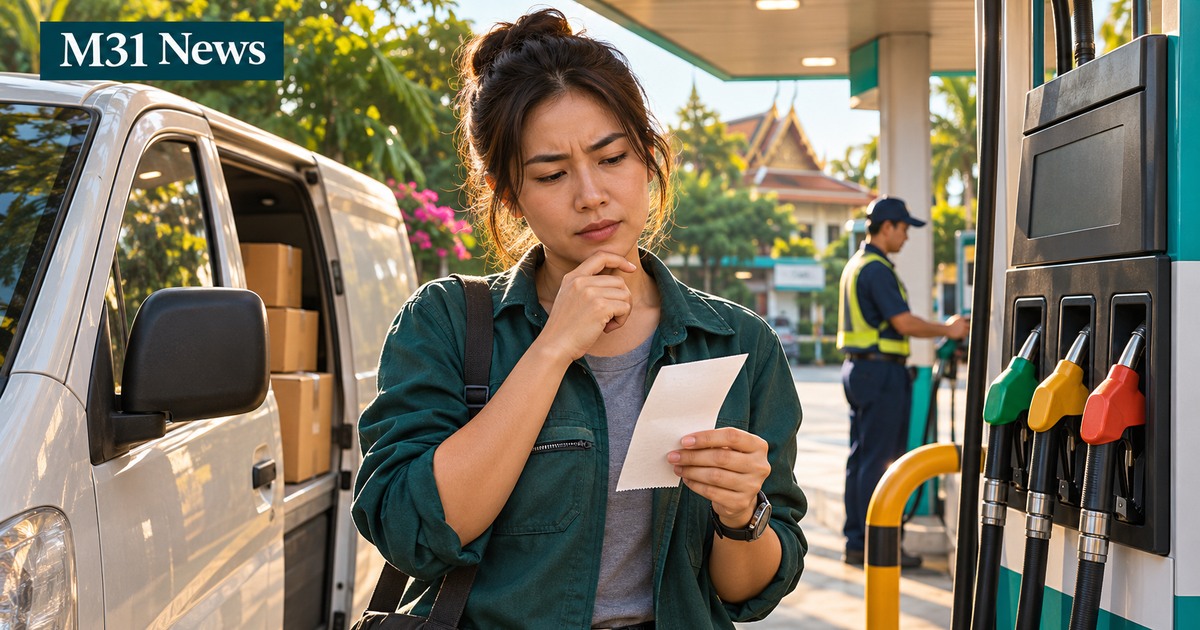
How much does Thailand’s fuel tax cut help a household or a small delivery firm? Start by separating the tax reduction from the change in the price at the pump. Both are expressed in baht per litre. The figure that enters a household or business budget is the price on the receipt.
Which fuels qualify, and for how long?
The Thai government announcement says the cabinet approved lower excise rates for B20 biodiesel blend and E20 gasohol on 27 October 2026. The measure runs from 28 October 2026 through 27 January 2027. B20 excise fell from 5.953 to 0.431 baht per litre, and E20 excise from 6.000 to 0.358 baht per litre. The measure covers those two grades.
Why the tax cut and the pump price differ
The Public Relations Department’s implementation notice says the Oil Fuel Fund reduced its per-litre subsidy at the same time. The notice cited a retail price of 33.50 baht per litre for both grades when the change took effect. That figure describes the rollout. Check the price at the station you will actually use. Subtracting the excise cut straight from the old retail price leaves out the fund adjustment.
What households and delivery firms can compare
Check the vehicle manual or manufacturer guidance for fuel compatibility first. With a compatible vehicle, compare fuel spending per kilometre across similar journeys using receipts and distance travelled. A delivery firm can track fuel spending and the number of deliveries on the same route to estimate fuel cost per stop. For quotes that extend beyond 27 January, use recent receipts as a baseline and budget for a higher fuel price scenario until an extension is confirmed.
References
This column expresses the author’s personal opinions.